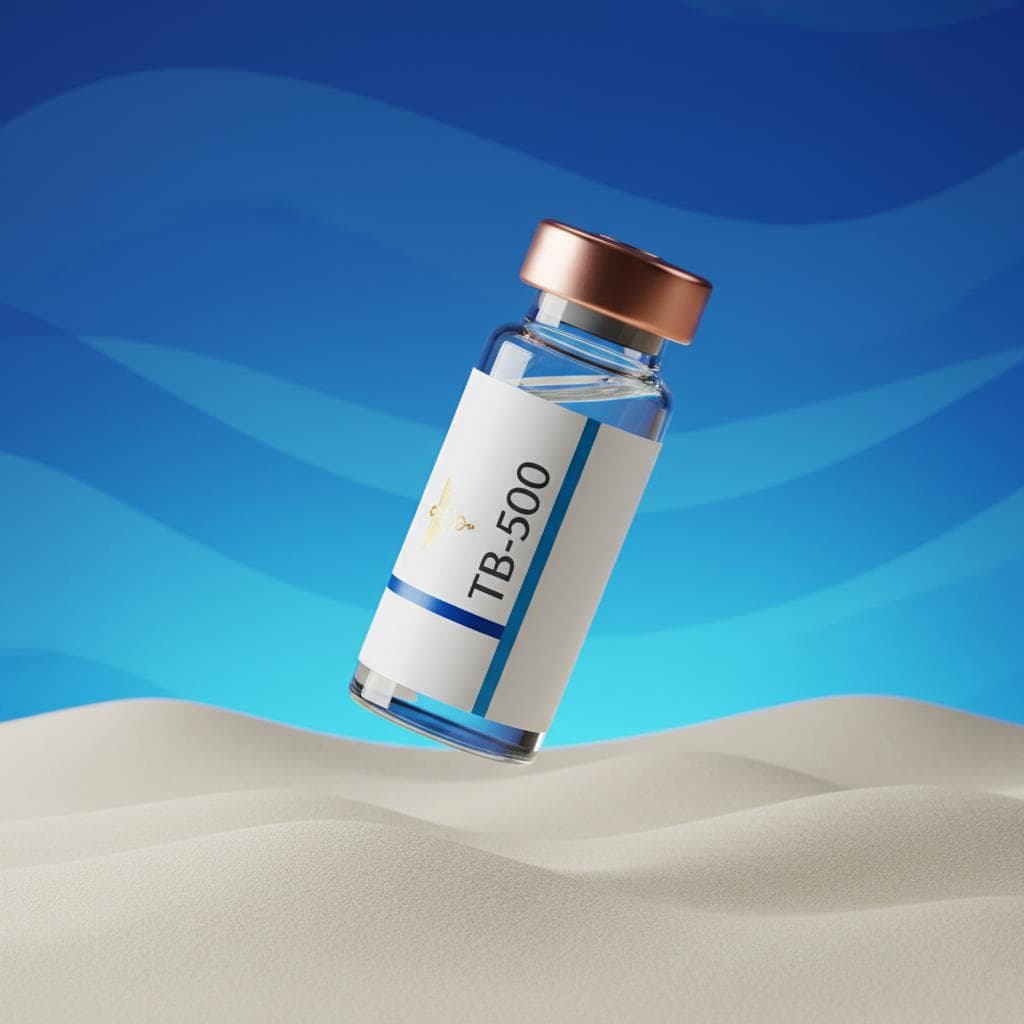
TB-500 (Thymosin Beta 4)
A versatile tissue repair peptide that promotes healing through cell migration and angiogenesis.
From $219/mo
How It Works
TB-500 exerts its primary effects through interaction with actin, the most abundant intracellular protein. It sequesters G-actin monomers, preventing their premature polymerization and making them available for rapid cytoskeletal remodeling when cell migration is needed. This actin-regulatory function is critical for cell motility - allowing endothelial cells (blood vessel lining), keratinocytes (skin cells), and fibroblasts (connective tissue cells) to migrate toward injury sites. TB-500 also upregulates Akt (protein kinase B) signaling, promoting cell survival and inhibiting apoptosis in damaged tissue. It stimulates angiogenesis through VEGF-independent mechanisms, enhancing nutrient and oxygen delivery to healing tissues. Additionally, TB-500 modulates NF-kB-mediated inflammation, reducing pro-inflammatory cytokines (TNF-alpha, IL-1beta, IL-6) while preserving the beneficial aspects of the inflammatory response needed for proper healing.
Key Benefits
Clinical Research
Cardiac research by Bock-Marquette et al. (2004) in Nature demonstrated that Thymosin Beta 4 significantly improved cardiac function and reduced infarct size after myocardial infarction in mouse models. A subsequent study showed Tb4 activated resident cardiac progenitor cells, promoting new cardiomyocyte formation. Corneal healing research by Sosne et al. (2002, 2005) showed that Tb4 accelerated corneal epithelial wound healing and reduced inflammation in both animal models and human clinical trials - the corneal formulation (RGN-259) progressed through Phase 3 trials for dry eye disease. Dermal wound healing studies demonstrated accelerated full-thickness wound closure with increased angiogenesis and collagen deposition (Malinda et al., 1999). Tendon repair studies showed enhanced healing of transected rat Achilles tendons with improved structural organization (Ehrlich and Hazard, 2010). Research on traumatic brain injury demonstrated neuroprotective effects and improved functional recovery.
Dosage & Administration
Dosage
A common loading protocol is 5-10 mg administered subcutaneously twice per week for the first 4-6 weeks, followed by a maintenance dose of 2.5-5 mg once or twice weekly for an additional 4-6 weeks. For acute injuries, some protocols use higher loading doses (10 mg twice weekly) for the first 2 weeks. Total treatment duration is typically 8-12 weeks depending on injury severity. For chronic conditions, extended protocols may be used with periodic physician reassessment. Your GetPepWell physician will design a protocol based on your specific injury, severity, and recovery goals.
Administration
Administered as a subcutaneous injection, typically in the abdominal area. Unlike BPC-157, TB-500 does not need to be injected near the injury site because it has strong systemic distribution properties - the peptide circulates throughout the body and concentrates at sites of inflammation and tissue damage. This makes it particularly useful for patients with multiple injury sites. Use a 29-31 gauge insulin syringe and rotate injection sites. There are no specific food restrictions. Injections can be given at any time of day, though some patients prefer morning dosing.
Side Effects
- Generally well-tolerated with a favorable safety profile
- Mild injection site reactions (redness, minor swelling)
- Temporary head rush or lightheadedness shortly after injection
- Mild lethargy or fatigue on the day of injection
- Occasional mild headache
- Transient flu-like symptoms during loading phase (uncommon)
Contra-indications
- Active cancer or history of cancer (promotes angiogenesis and cell migration)
- Known hypersensitivity to Thymosin Beta 4 or any excipients
- Pregnancy or breastfeeding
- Children under 18 years of age
- Active proliferative diabetic retinopathy
Drug Interactions
- Anti-angiogenic medications (bevacizumab, sunitinib) - TB-500 promotes angiogenesis, directly opposing these drugs
- Anticoagulants - monitor closely as TB-500 promotes new blood vessel formation in healing tissue
- Growth hormone or GH secretagogues - potential additive effects on tissue repair; not necessarily harmful but monitor
- BPC-157 - commonly combined for synergistic healing effects; considered safe in clinical practice
Storage Info
Store lyophilized powder refrigerated at 36-46 degrees F (2-8 degrees C). After reconstitution with bacteriostatic water, store refrigerated and use within 21 days. Do not freeze reconstituted solution. Protect from light. TB-500 is relatively stable but should be handled gently during reconstitution - swirl, do not shake. Some practitioners pre-load syringes for convenience; these should be stored refrigerated and used within 7 days.
TB-500 (Thymosin Beta 4) FAQ
Find answers to the most common questions about this treatment.
Related Products
Interested in TB-500 (Thymosin Beta 4)?
Schedule a consultation with a licensed physician to see if this treatment is right for you.