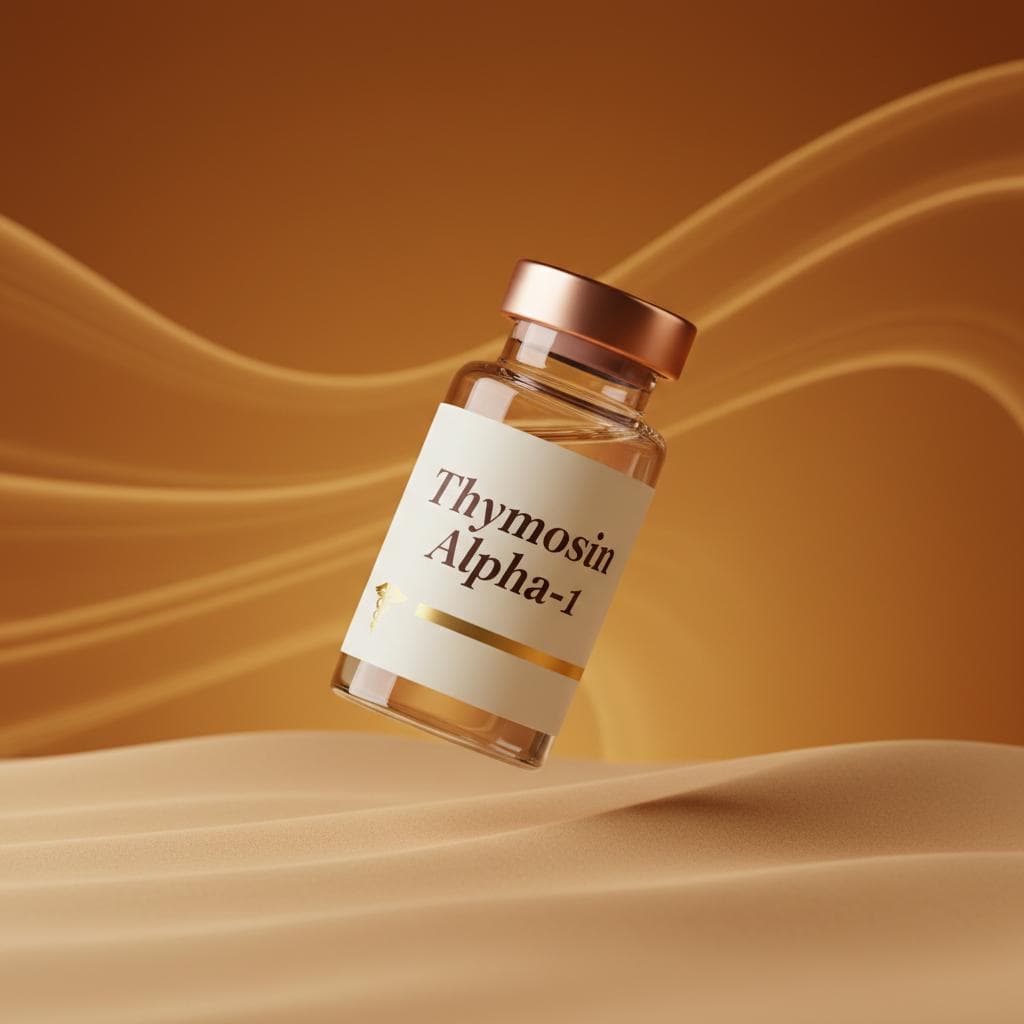
Thymosin Alpha 1
A thymic peptide that enhances immune surveillance and T-cell mediated defense.
From $229/mo
How It Works
Thymosin Alpha 1 acts through Toll-like receptor 9 (TLR9) on dendritic cells and through direct effects on T-lymphocyte precursors. TLR9 activation triggers the MyD88/NF-kB signaling pathway, promoting dendritic cell maturation and enhanced antigen presentation to T-cells. Ta1 stimulates the differentiation of CD4+ helper T-cells and CD8+ cytotoxic T-cells from immature thymocytes, increases natural killer (NK) cell activity, and promotes antibody responses to vaccines. It modulates the Th1/Th2 balance toward a Th1-dominant response, enhancing cellular immunity against intracellular pathogens and tumor cells. Additionally, it upregulates MHC class I expression on antigen-presenting cells, improving immune surveillance. Ta1 also has anti-inflammatory effects through induction of indoleamine 2,3-dioxygenase (IDO), which helps prevent excessive inflammatory responses.
Key Benefits
Clinical Research
Thymosin Alpha 1 has been evaluated in over 80 clinical trials involving more than 4,400 patients. For hepatitis B, a meta-analysis of 8 randomized controlled trials (n=669) demonstrated that Ta1 therapy achieved complete virologic response (undetectable HBV DNA) in 36.2% of patients vs 19.2% for interferon alone (Iyer et al., 2001). For hepatitis C, combination therapy with interferon-alpha produced sustained virologic response rates of 26-40% in patients who failed prior interferon monotherapy. In cancer immunotherapy, studies in hepatocellular carcinoma, melanoma, and non-small-cell lung cancer showed improved survival and enhanced response to concurrent chemotherapy. During the SARS-CoV-1 outbreak, Ta1 was used in Wuhan hospitals with reports of improved T-cell counts and clinical outcomes. Vaccine adjuvant studies demonstrated enhanced antibody titers when Ta1 was co-administered with influenza and hepatitis B vaccines, particularly in elderly and immunocompromised populations.
Dosage & Administration
Dosage
The standard clinical dose is 1.6 mg administered subcutaneously twice weekly (e.g., Monday and Thursday). For acute immune support, some protocols use 1.6 mg daily for 2-4 weeks before transitioning to twice-weekly maintenance. Lower doses of 0.8-1.0 mg twice weekly may be used for general immune optimization in otherwise healthy individuals. Treatment duration varies from 6 months (hepatitis protocols) to ongoing maintenance therapy for immune support. Your GetPepWell physician will establish a dosing protocol tailored to your specific immune health goals.
Administration
Administered as a subcutaneous injection, typically in the abdominal area or upper arm. Injections are given twice weekly on non-consecutive days (e.g., Monday/Thursday or Tuesday/Friday). Use a 29-31 gauge insulin syringe. There are no specific food restrictions around dosing. Some protocols administer Ta1 in the morning to align with circadian immune function patterns, though this is not strictly required. The injection is well-tolerated and can be self-administered after initial physician instruction.
Side Effects
- Generally very well-tolerated with an excellent safety profile across clinical trials
- Mild injection site reactions (redness, minor swelling)
- Transient low-grade fever (sign of immune activation, uncommon)
- Mild muscle aches
- Fatigue in the first 1-2 weeks (usually resolves)
Contra-indications
- Known hypersensitivity to Thymosin Alpha 1 or any excipients
- Patients on immunosuppressive therapy post-organ transplant (could trigger rejection)
- Active autoimmune disease in flare (may exacerbate)
- Pregnancy or breastfeeding
- Children under 18 unless under specialist supervision
Drug Interactions
- Immunosuppressants (tacrolimus, cyclosporine, mycophenolate) - Ta1 may counteract immunosuppression; contraindicated in transplant recipients
- Interferon-alpha - synergistic effects (used together clinically for hepatitis); monitor liver function
- Corticosteroids - chronic use may blunt Ta1 efficacy; discuss timing and dosing
- Vaccines - Ta1 may enhance vaccine response; this is generally beneficial but inform your physician
- Checkpoint inhibitors (nivolumab, pembrolizumab) - potential additive immune activation; oncologist coordination required
Storage Info
Store lyophilized powder refrigerated at 36-46 degrees F (2-8 degrees C). After reconstitution with sterile water or bacteriostatic water, store refrigerated and use within 14 days. Do not freeze. Protect from light. Pre-mixed single-dose syringes should be stored refrigerated until use.
Thymosin Alpha 1 FAQ
Find answers to the most common questions about this treatment.
Related Products
Interested in Thymosin Alpha 1?
Schedule a consultation with a licensed physician to see if this treatment is right for you.