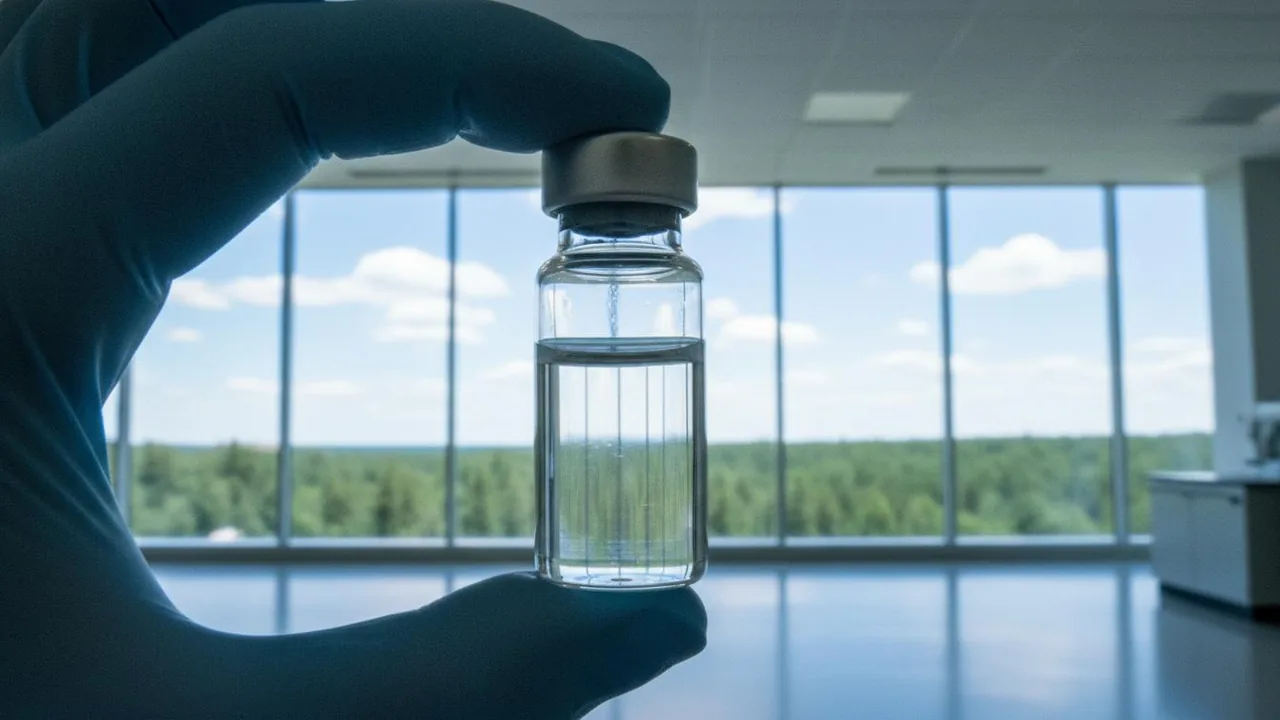

What Are Peptides?
Peptides are short chains of amino acids - typically between 2 and 50 amino acids in length - that serve as signaling molecules in the human body. They are smaller than proteins but play equally critical roles in regulating biological processes. Your body naturally produces thousands of peptides that act as hormones, neurotransmitters, and growth factors to coordinate everything from metabolism to immune function.
Unlike synthetic drugs designed to override biological processes, therapeutic peptides work by mimicking or enhancing signals your body already recognizes. This is one reason peptide therapy has gained significant clinical interest - these molecules communicate through existing biological pathways rather than introducing entirely foreign mechanisms. Because peptides are naturally occurring, the body often tolerates them well, though individual responses vary and medical supervision is essential.
The distinction between peptides and proteins is primarily one of size. Insulin, for example, is a peptide hormone with 51 amino acids. Growth hormone-releasing peptides contain as few as 6 amino acids. Each peptide has a specific three-dimensional shape that determines which receptors it binds to and what biological response it triggers.
How Peptide Therapy Works
Peptide therapy involves administering specific peptides to stimulate targeted biological responses. When a peptide is introduced into the body - typically through subcutaneous injection - it binds to specific cell receptors and triggers a cascade of cellular activity. The peptide essentially delivers a message that tells cells to perform a particular function.
For example, GLP-1 receptor agonists like semaglutide bind to receptors in the pancreas and brain, regulating blood sugar and appetite. Tirzepatide engages both GIP and GLP-1 receptors. Smaller endogenous peptides and cofactors used in compounded preparations interact with their respective receptor or enzyme systems. Each molecule has a specific target and mechanism.
The therapeutic approach is highly individualized. A physician evaluates the patient through a comprehensive health assessment, reviews lab work, and determines which compounded preparation (if any) is appropriate for the patient's goals and medical history. Dosing, frequency, and duration are all tailored to the individual. Ongoing monitoring is a standard part of responsible care.
Compounded Preparations in This Catalog
GetPepWell's catalog is currently scoped to four physician-supervised compounded preparations. All four are dispensed by a licensed compounding pharmacy partner under individual physician prescription. None of the compounded preparations themselves is an FDA-approved finished product.
The weight-management preparations are compounded semaglutide (a GLP-1 receptor agonist) and compounded tirzepatide (a dual GIP/GLP-1 receptor agonist). For each, the active pharmaceutical ingredient is the same molecule used in an FDA-approved finished product (Ozempic and Wegovy for semaglutide; Mounjaro and Zepbound for tirzepatide). Outcomes from a compounded preparation are not guaranteed to match the finished-product trial results.
The cellular and antioxidant preparations are compounded NAD+ (a coenzyme used in mitochondrial energy metabolism and several enzyme systems) and compounded glutathione (a tripeptide that participates in the cell's endogenous antioxidant system and hepatic phase II metabolism). Neither is an FDA-approved finished product, and neither is a treatment for any specific disease. Both are offered as physician-supervised supplementation.
What the Available Evidence Supports
The kind of outcome a peptide preparation is associated with depends on the molecule, the patient, and whether the evidence comes from the FDA-approved finished product or from the compounded preparation. For the weight-management molecules in this catalog, the GLP-1 and dual GIP/GLP-1 finished products have an extensive clinical-trial program that reported weight changes over the trial periods. Outcomes from a compounded preparation are not guaranteed to match those finished-product trial results.
For the cellular and antioxidant preparations (compounded NAD+ and compounded glutathione), there is no comparable finished-product trial program. Patient experience varies; some patients describe subjective changes in energy or complexion, others do not. Neither preparation is a treatment for any specific disease, and outcomes are not guaranteed.
Across all four preparations, realistic expectations matter. Changes (where they occur) develop over weeks to months of consistent use under physician supervision. Results vary significantly between individuals based on age, overall health, genetics, lifestyle, and adherence. Your physician will discuss what the available evidence supports for the specific compounded preparation considered for you, and what it does not.
Who Is a Candidate for Peptide Therapy?
Peptide therapy candidates are adults who have specific health goals that may be supported by peptide treatment and who have been evaluated by a licensed physician. Common candidate profiles include individuals seeking support with weight management who have not achieved adequate results through diet and exercise alone, adults experiencing age-related changes in body composition and energy levels, patients recovering from injuries or surgeries, and individuals with specific hormonal deficiencies identified through lab work.
Not everyone is a suitable candidate. Peptide therapy is generally not recommended for pregnant or breastfeeding women, individuals with active cancers (unless specifically directed by an oncologist), patients with certain autoimmune conditions, and people with allergies to specific peptide compounds. A thorough medical intake and physician consultation are required before any peptide therapy is prescribed.
At GetPepWell, every patient completes a comprehensive health questionnaire and has a one-on-one consultation with a licensed physician before any treatment plan is developed. This is not optional - it is a fundamental requirement. Peptides are prescription medications, and responsible prescribing requires a complete understanding of the patient's health status, current medications, and treatment goals.
What to Expect from the Peptide Therapy Process
The peptide therapy process at GetPepWell follows a structured clinical pathway. It begins with account creation and a detailed medical intake questionnaire that covers your health history, current medications, allergies, lifestyle factors, and treatment goals. This information is reviewed by a licensed physician before your consultation.
During the physician consultation, your doctor reviews your health profile, discusses which peptides may be appropriate, explains the expected timeline and potential side effects, and answers your questions. If peptide therapy is determined to be appropriate, the physician writes a prescription that is sent electronically to a licensed compounding pharmacy. The pharmacy prepares your medication and ships it directly to you with detailed administration instructions.
Ongoing care is a critical component. Your physician monitors your progress through follow-up consultations, adjusts dosing as needed, and ensures the treatment remains safe and effective. Lab work may be ordered periodically to track relevant biomarkers. This continuous physician oversight distinguishes legitimate peptide therapy from unregulated peptide sales. At GetPepWell, you always have access to your prescribing physician throughout your treatment.
Safety Considerations
Like all medical treatments, peptide therapy carries potential risks and side effects. Common side effects vary by molecule but may include injection site reactions (redness, swelling, or mild pain), nausea (particularly with GLP-1 receptor agonists), headache, fatigue, or digestive changes. Most side effects are mild and temporary, resolving as the body adjusts to treatment.
Serious adverse effects are less common but possible. These may include allergic reactions, significant gastrointestinal distress, or interactions with existing medications. This is precisely why physician supervision is non-negotiable. Your prescribing physician is trained to recognize warning signs, adjust treatment as needed, and ensure your safety throughout the process.
It is also critical to obtain compounded preparations only from licensed compounding pharmacies operating under federal (Section 503A or 503B) and state regulation. Products sold by unregulated suppliers - particularly those that bypass any prescription requirement - may be contaminated, mislabeled, incorrectly dosed, or degraded, and accepting that risk is not appropriate. GetPepWell partners exclusively with accredited compounding pharmacies that meet stringent quality and safety standards.
Where the Field Is Heading
Peptide-based medicine is an active area of clinical research. The FDA-approved GLP-1 finished products have driven substantial interest in incretin biology, and additional incretin-targeting molecules are in various stages of clinical investigation. Advances in delivery methods (oral formulations of select molecules, alternative routes for specific compounds) continue to develop.
The regulatory landscape continues to evolve. The list of bulk substances that compounding pharmacies are permitted to use is reviewed by the FDA over time, and the availability of a given compounded preparation can change in response. GetPepWell tracks regulatory developments and adjusts our catalog accordingly. Our current catalog is intentionally narrow: four compounded preparations, each chosen so that the active ingredient has either an FDA-approved finished-product counterpart or a well-characterized biological role.
Our physician team continuously evaluates emerging evidence to inform treatment protocols and will discuss with you whether a recommended compounded preparation remains the right choice as new information becomes available.